
Delivering Cultural Heritage Management Services at Scale Across the World's Largest Iron Ore Operation
BHP Group Limited (BHP) is an ASX global resources company headquartered in Melbourne, Australia, and is the world’s largest mining company, producing commodities including iron ore, copper and metallurgical coal.
BHP operates across multiple areas, with significant assets in Western Australia’s Pilbara, South Australia, the Americas and other regions. Its commodities underpin essential infrastructure, manufacturing and energy-transition technologies, including steelmaking, renewable energy systems and electrification.
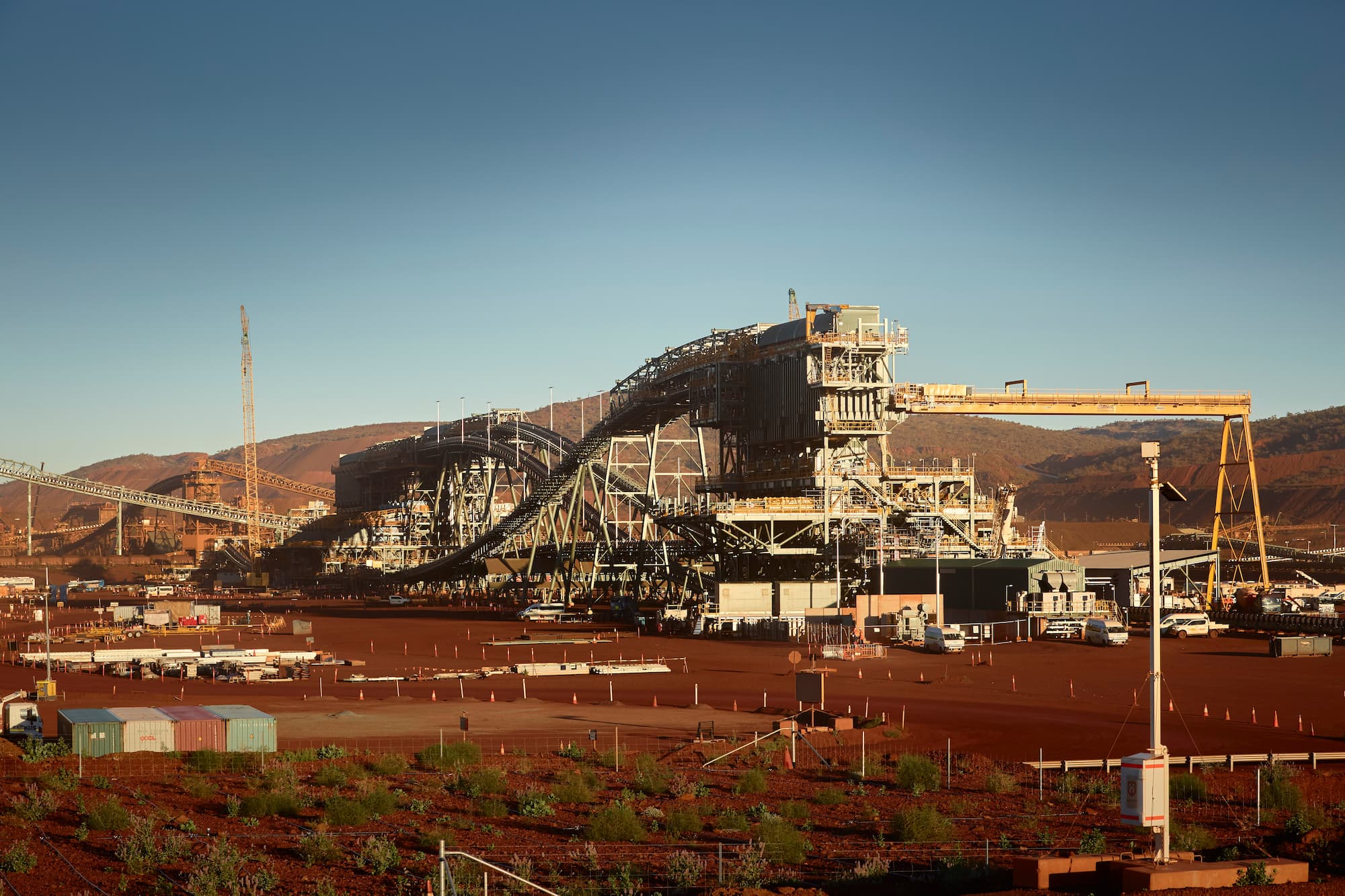
BHP’s Mining Area C and South Flank Hub in Western Australia’s Pilbara forms the world’s largest iron ore operation, producing and shipping approximately 145 million tonnes per annum. The scale, complexity and sensitivity of the cultural heritage landscape across this tenure demands an equally rigorous and experienced advisory approach.
Australian Cultural Heritage Management (ACHM) provides specialist Aboriginal heritage advisory services to the Banjima people across both projects, supporting the implementation of complex heritage management measures including Section 18 processes, technical assessments of Pleistocene rockshelters, rock art recording, ethnographic assessments, salvage programs and long-range planning frameworks required for regulatory approvals under the Aboriginal Heritage Act 1972 and Environmental Protection Act 1986.
Our role also encompasses the consolidation of decades of multidisciplinary heritage records, site verification and assessment across extensive tenure, and strategic advice on integrating cultural heritage considerations into the full operational lifecycle of one of the most significant resource developments in Australia.

Client
BHP Group Limited
Location
Western Australia
Sectors
Energy and Mining
Road and Rail
Infrastructure
Services
Results Delivered
Embedding Traditional Owner Participation in Cultural Heritage Decision-Making Across a 145 Million-Tonne Iron Ore Operation
Australian Cultural Heritage Management provides specialist Aboriginal heritage advisory services across BHP’s Mining Area C and South Flank Hub, an operation shipping approximately 145 million tonnes of iron ore per annum. Our team is integral to the protectiona and mitigation requirements of hundreds of archaeological sites and numerous significant ethnographic places across the tenure, conducting complex ILUA negotiations and delivering Section 18 processes, ethnographic assessments and salvage programs that ensure BHP’s operations remain compliant with the Aboriginal Heritage Act 1972. Careful heritage management at this scale protects both the cultural landscape and the operational certainty of one of Australia’s most significant resource developments.
Frequently Asked Questions
What Aboriginal heritage obligations apply to iron ore mining operations in Western Australia?
Iron ore mining operations in Western Australia are governed primarily by the Aboriginal Heritage Act 1972 (WA), which prohibits the excavation, damage or destruction of Aboriginal sites unless authorised by a Section 18 ministerial consent. Proponents are also required to comply with any heritage conditions attached to environmental approvals under the Environmental Protection Act 1986, and to meet the obligations of any Indigenous Land Use Agreements (ILUAs) in place with relevant Traditional Owner groups. For complex, long-running operations like BHP’s Mining Area C and South Flank Hub, this requires ongoing heritage survey, site monitoring, Section 18 processes and regular engagement with Traditional Owner representatives. Australian Cultural Heritage Management provides specialist Aboriginal heritage advisory services across all these compliance requirements. Learn more about our archaeological site monitoring services.
What is a Section 18 consent under the Aboriginal Heritage Act 1972 and how does a mining company obtain one?
A Section 18 consent is an authorisation issued by the Western Australian Minister for Aboriginal Affairs that permits a proponent to use land in a way that may harm or destroy an Aboriginal site registered under the Aboriginal Heritage Act 1972. To obtain a Section 18 consent, a proponent must submit an application to the Department of Planning, Lands and Heritage detailing the proposed activity, the Aboriginal sites affected, the outcomes of consultation with Traditional Owners, and any proposed mitigation measures. The application is assessed by the Aboriginal Cultural Materials Committee (ACMC) before a ministerial decision is made. Australian Cultural Heritage Management prepares Section 18 applications and supporting heritage documentation for mining clients operating across Western Australia.
What is the role of an Indigenous Land Use Agreement in managing cultural heritage on mining tenure?
An Indigenous Land Use Agreement (ILUA) is a negotiated agreement between a mining company and a Traditional Owner group that sets out the terms for access to, and use of, land within a native title area. ILUAs often include heritage management commitments, such as survey requirements, consultation protocols, site avoidance obligations and agreed compensation or benefit-sharing arrangements, that go beyond the minimum requirements of the Aboriginal Heritage Act 1972. They provide certainty for both parties and establish a framework for respectful, ongoing collaboration. Australian Cultural Heritage Management supports Traditional Owner groups and mining proponents through ILUA negotiations, helping to develop heritage provisions that are workable, legally sound and culturally appropriate.
Why is independent cultural heritage advice important for Traditional Owner groups negotiating with mining companies?
Independent cultural heritage advice is essential for Traditional Owner groups to ensure that their heritage interests are accurately assessed, clearly articulated and appropriately protected in any agreement with a mining company. Without independent technical expertise, Traditional Owner groups may lack the information needed to evaluate the significance of affected sites, assess the adequacy of proposed mitigation measures, or negotiate on an equal footing. Australian Cultural Heritage Management works directly for and on behalf of Traditional Owner corporations, including the Banjima Native Title Aboriginal Corporation, providing technically rigorous, independent advice that strengthens the position of Traditional Owners in any heritage negotiation.