Cultural Values Mapping
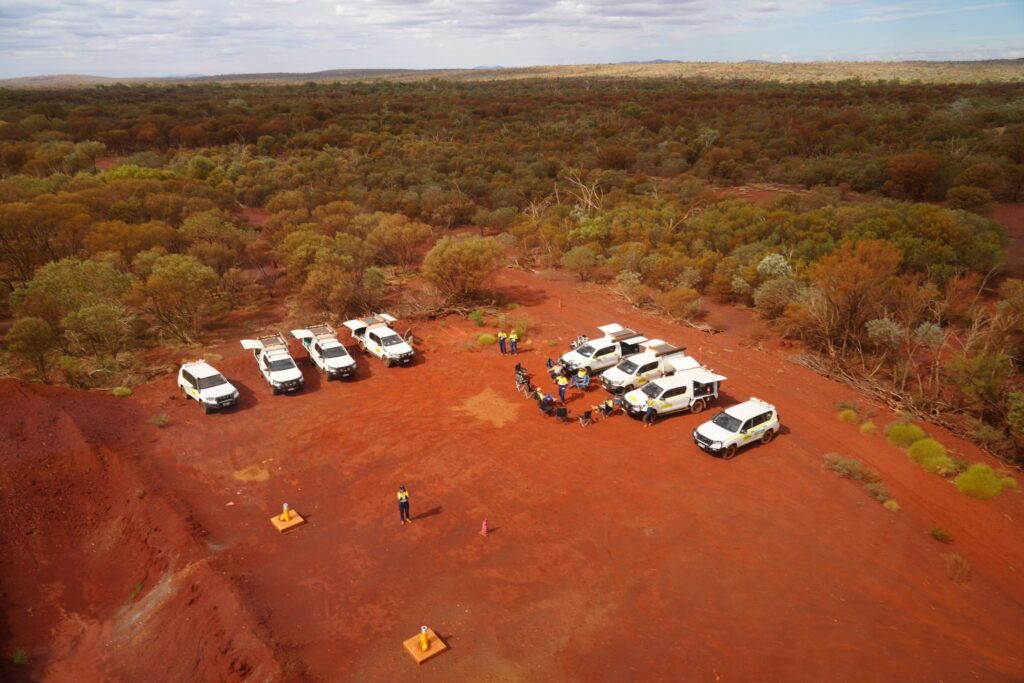
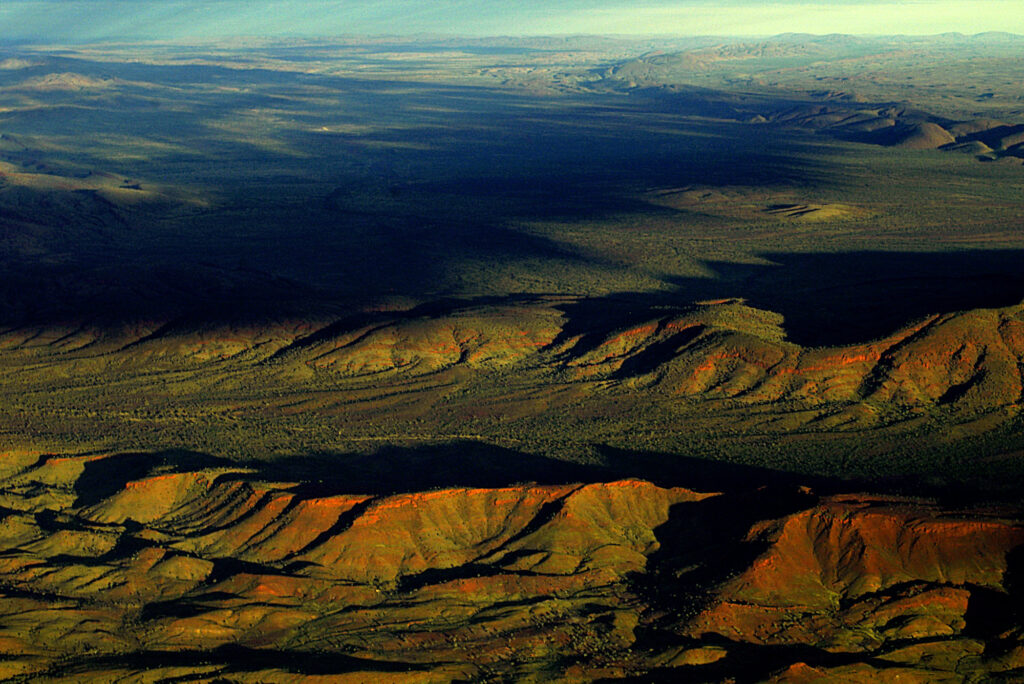
Visualising and Protecting Connections to Country
Cultural values mapping is a powerful way to understand how stories, places, practices, and lived connections shape a cultural landscape.
At ACHM, our cultural values mapping brings together deep anthropological expertise with advanced geospatial tools to document the significance of Country as understood by Traditional Owners.
By combining on‑Country consultation, cultural knowledge recording, and spatial analysis, we build detailed maps that reflect songlines, culturally significant landforms, ethnohistorical accounts, language associations, and contemporary First Peoples’ values.
These outcomes don’t just visualise information—they safeguard it, ensuring that cultural values are recognised, respected, and meaningfully embedded into planning and decision‑making processes.
For proponents, cultural values mapping provides clarity, confidence, and a culturally informed foundation for project design.
Whether guiding early-stage development, shaping mine and infrastructure layouts, or supporting long-term land management, ACHM’s cultural mapping processes help identify areas to avoid, understand cultural interconnections across landscapes, and ensure heritage protection is central—not secondary—to project outcomes.
This collaborative, co‑designed approach supports stronger relationships, clearer communication, and enduring cultural outcomes that continue well beyond a project’s lifecycle.
Why Choose ACHM
Experienced Team
Our anthropologists and archaeologists bring decades of skill and expertise to every project.
Nationwide Reach
From urban developments to remote communities, we operate across Australia.
Reputation of Excellence
Trusted by clients for our professionalism, accuracy, and commitment to cultural preservation.
Case Studies
Testimonials
Mandy Edwards
Sector Manager | Millar Merrigan
ACHM has consistently provided us with expert advice on Aboriginal cultural heritage matters, including the preparation of Cultural Heritage Management Plans. They’re great to work with—professional, competitively priced, and reliable in meeting timeframes. Their practical approach and responsiveness make them a valued partner on our projects.
Ed Armstrong
Chief Executive Officer | Banjima Native Title Aboriginal Corporation
ACHM are engaged extensively across Banjima Country and they provide exceptional expertise, professionalism, customer service and a genuine passion for preserving and promoting cultural heritage. ACHM goes beyond mere consultancy through consistently delivering professional services, solutions and best practice in every thing they do.
Jordan Bell
Senior Development Manager | Dav Consulting
We recently engaged ACHM to manage extensive Cultural Heritage Artefact Salvage Operations for an expansive and complex greenfields development site on north side of Melbourne. The diligence, open communication, efficiency and positive outcomes achieved by the ACHM Team, including in their coordination and management of the local RAP, was first class, and made my job as Development Manager substantially easier. Cannot recommend highly enough
Chris Monahan
Senior Development Manager | Avid
I have been a client of ACHM for over a decade and have engaged their services across four large-scale projects. Throughout this time, their dedication and professionalism have remained consistently impressive. ACHM excels at managing client expectations while operating sensitively within complex environments. They are highly skilled at guiding clients through cultural heritage approval processes, striking the delicate balance between client priorities and cultural sensitivities. I highly recommend ACHM for their expertise and commitment.
Fionna Warren and Chanz Crowley
ABIGroup
We wish to thank yourself, Erica Walther and Shaun Canning who have at all times been professional, free to discuss potential options and provide feedback on the status of the Cultural Heritage Management Plans. We have found the ACHM team to be knowledgeable and very easy to deal with.
Dylan McWhinney
Environmental Coordinator, GMW Connections Project
ACHM have provided us with numerous due diligence assessments and Cultural Heritage Management Plans to both standard and complex level. They approach their scope with our project timeframes and budgets in mind, and I know I can rely on them to get the best outcome for these projects. ACHM provide pragmatic staff with great traditional owner relationships allowing for quick turnaround times.
Mandy Edwards
Sector Manager | Millar Merrigan
ACHM has consistently provided us with expert advice on Aboriginal cultural heritage matters, including the preparation of Cultural Heritage Management Plans. They’re great to work with—professional, competitively priced, and reliable in meeting timeframes. Their practical approach and responsiveness make them a valued partner on our projects.
Ed Armstrong
Chief Executive Officer | Banjima Native Title Aboriginal Corporation
ACHM are engaged extensively across Banjima Country and they provide exceptional expertise, professionalism, customer service and a genuine passion for preserving and promoting cultural heritage. ACHM goes beyond mere consultancy through consistently delivering professional services, solutions and best practice in every thing they do.
Jordan Bell
Senior Development Manager | Dav Consulting
We recently engaged ACHM to manage extensive Cultural Heritage Artefact Salvage Operations for an expansive and complex greenfields development site on north side of Melbourne. The diligence, open communication, efficiency and positive outcomes achieved by the ACHM Team, including in their coordination and management of the local RAP, was first class, and made my job as Development Manager substantially easier. Cannot recommend highly enough
Chris Monahan
Senior Development Manager | Avid
I have been a client of ACHM for over a decade and have engaged their services across four large-scale projects. Throughout this time, their dedication and professionalism have remained consistently impressive. ACHM excels at managing client expectations while operating sensitively within complex environments. They are highly skilled at guiding clients through cultural heritage approval processes, striking the delicate balance between client priorities and cultural sensitivities. I highly recommend ACHM for their expertise and commitment.
Fionna Warren and Chanz Crowley
ABIGroup
We wish to thank yourself, Erica Walther and Shaun Canning who have at all times been professional, free to discuss potential options and provide feedback on the status of the Cultural Heritage Management Plans. We have found the ACHM team to be knowledgeable and very easy to deal with.
Dylan McWhinney
Environmental Coordinator, GMW Connections Project
ACHM have provided us with numerous due diligence assessments and Cultural Heritage Management Plans to both standard and complex level. They approach their scope with our project timeframes and budgets in mind, and I know I can rely on them to get the best outcome for these projects. ACHM provide pragmatic staff with great traditional owner relationships allowing for quick turnaround times.
Frequently Asked Questions
What is cultural values mapping?
Cultural values mapping records and spatially represents the places, stories, practices and connections that give Country its significance to Traditional Owners. Combining anthropological research, on Country consultation and GIS, it produces maps of songlines, significant landforms, resource areas and language associations that can be embedded into planning and project decisions.
What is the difference between cultural values mapping and an archaeological survey?
An archaeological survey records physical evidence such as artefacts, scarred trees and stone arrangements. Cultural values mapping captures intangible significance, including stories, ceremonies, songlines, resource use and spiritual associations with land and water. Together they provide a complete picture of cultural heritage, as many significant places may have no physical attributes.
How does cultural values mapping relate to a Cultural Values Assessment?
A Cultural Values Assessment identifies and documents what Traditional Owners consider significant about an area and how a project may affect those values. Cultural values mapping provides the spatial layer, showing where those values sit across the landscape so impacts can be measured, avoided or managed through design and approval conditions.
What are intangible cultural values?
Intangible cultural values are the aspects of heritage that usually cannot be seen or touched, such as stories, songlines, ceremony, language, knowledge of plants and animals, and spiritual connections to Country. A place can be highly significant without physical evidence, and activities can harm these values by restricting access, altering water flows or disturbing important views.
Do CHMPs need to consider intangible cultural values in Victoria?
Yes. Under Victoria’s Aboriginal Heritage Act 2006, Aboriginal intangible values relating to any place are to be considered. CHMP guidelines note that projects which overlook these values may be more open to legal dispute, so understanding and mapping them early helps sponsors and Registered Aboriginal Parties agree well founded management conditions.
How are culturally sensitive or restricted values protected in mapping?
Through protocols agreed with Traditional Owners before recording begins. Restricted or gender specific knowledge can be held in secure layers, generalised into broader zones or excluded entirely, while project teams receive only the information needed to avoid impacts. Ownership and use of the data remain with the community under clear agreements.
What is Indigenous Cultural and Intellectual Property (ICIP) in cultural mapping?
ICIP refers to the rights of First Nations peoples over their traditional knowledge, cultural expressions and documentation of their heritage in any form. In cultural values mapping, respecting ICIP means Traditional Owners decide what is recorded, how it is used and who can access it, with consent and attribution built into agreements from the outset.
How does cultural values mapping help mining and infrastructure projects?
It shows proponents where cultural values exist before layouts are fixed, so mine pits, haul roads, transmission lines and corridors can be designed around significant places. Early clarity reduces approval risk, supports agreement making with Traditional Owners and helps avoid the costly redesign, delay and reputational harm that follow late discovery.
Who is involved in cultural values mapping?
Traditional Owners and knowledge holders lead the process, supported by anthropologists, archaeologists and GIS specialists. Elders and community members guide what is recorded during on Country visits, interviews and workshops, while the technical team documents information accurately, applies agreed protocols and translates cultural knowledge into maps that inform planning decisions.
What do cultural values mapping outputs look like?
Outputs typically include GIS layers and maps showing significant places, songlines, resource zones and areas to avoid, supported by a report describing values, sources and management recommendations. Depending on agreed protocols, information may be delivered as secure data packages, interactive web maps or community held repositories for long term use.
Can cultural values mapping support native title and land management?
Yes. Mapping connections to Country can inform native title research, Indigenous Land Use Agreement (ILUA) discussions, Indigenous Protected Area planning and caring for Country programs. Community owned maps and GIS data also help Traditional Owner corporations negotiate from a position of strength and preserve cultural knowledge for future generations, well beyond a single project.
When should cultural values mapping be done on a project?
As early as possible, ideally during feasibility, site selection or route planning, before designs are locked in. Early mapping gives Traditional Owners meaningful input while options remain open, allows significant areas to be avoided rather than mitigated, and builds realistic engagement timeframes into the project program.