
Mine Closure Planning
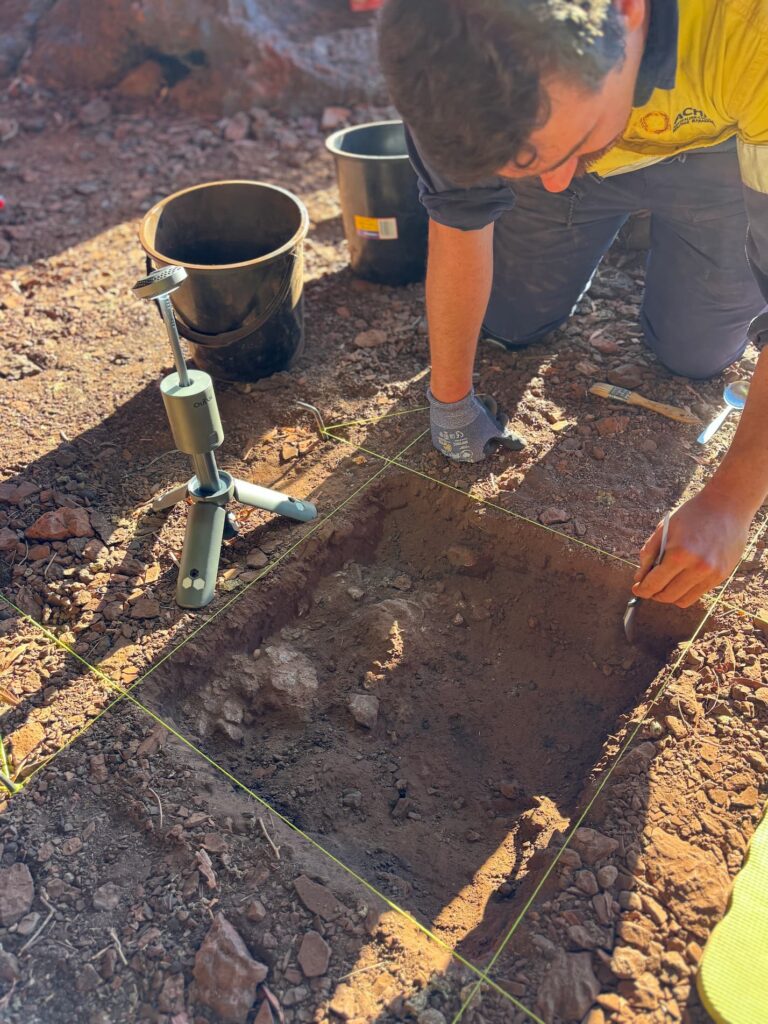
Culturally Informed Mine Closure Planning
Mine closure planning is far more than an engineering or environmental exercise—it is a critical moment to ensure the cultural integrity of Country is protected long after operations cease.
Effective closure begins early, integrating cultural heritage considerations from the outset to prevent the loss of significant places, knowledge systems, and community rights.
ACHM’s cultural heritage specialists bring decades of experience working with Traditional Owners, embedding cultural values, native title rights, and heritage protection protocols directly into closure frameworks.
This approach ensures that closure strategies are not only technically sound but culturally defensible—supporting informed decision‑making, legal compliance, and respectful outcomes for the communities whose Country has sustained the mining lifecycle.
Cultural heritage is integral to mine closure because it anchors rehabilitation and future land use planning in the lived histories, identities, and aspirations of Traditional Owners.
ACHM’s work across major closure projects demonstrates how culturally informed closure planning safeguards sites, maintains access rights, and provides pathways for long‑term community involvement in post‑mining land stewardship.
By recognising that closure marks a transition rather than an ending, we help proponents build enduring legacies grounded in cultural resilience, intergenerational knowledge, and community‑supported land futures.
This holistic approach reflects both regulatory expectations and best‑practice principles, ensuring closure outcomes honour Country, culture, and community in equal measure.

Why Choose ACHM
Experienced Team
Our anthropologists and archaeologists bring decades of skill and expertise to every project.
Nationwide Reach
From urban developments to remote communities, we operate across Australia.
Reputation of Excellence
Trusted by clients for our professionalism, accuracy, and commitment to cultural preservation.
Case Studies
Testimonials
Mandy Edwards
Sector Manager | Millar Merrigan
ACHM has consistently provided us with expert advice on Aboriginal cultural heritage matters, including the preparation of Cultural Heritage Management Plans. They’re great to work with—professional, competitively priced, and reliable in meeting timeframes. Their practical approach and responsiveness make them a valued partner on our projects.
Ed Armstrong
Chief Executive Officer | Banjima Native Title Aboriginal Corporation
ACHM are engaged extensively across Banjima Country and they provide exceptional expertise, professionalism, customer service and a genuine passion for preserving and promoting cultural heritage. ACHM goes beyond mere consultancy through consistently delivering professional services, solutions and best practice in every thing they do.
Jordan Bell
Senior Development Manager | Dav Consulting
We recently engaged ACHM to manage extensive Cultural Heritage Artefact Salvage Operations for an expansive and complex greenfields development site on north side of Melbourne. The diligence, open communication, efficiency and positive outcomes achieved by the ACHM Team, including in their coordination and management of the local RAP, was first class, and made my job as Development Manager substantially easier. Cannot recommend highly enough
Chris Monahan
Senior Development Manager | Avid
I have been a client of ACHM for over a decade and have engaged their services across four large-scale projects. Throughout this time, their dedication and professionalism have remained consistently impressive. ACHM excels at managing client expectations while operating sensitively within complex environments. They are highly skilled at guiding clients through cultural heritage approval processes, striking the delicate balance between client priorities and cultural sensitivities. I highly recommend ACHM for their expertise and commitment.
Fionna Warren and Chanz Crowley
ABIGroup
We wish to thank yourself, Erica Walther and Shaun Canning who have at all times been professional, free to discuss potential options and provide feedback on the status of the Cultural Heritage Management Plans. We have found the ACHM team to be knowledgeable and very easy to deal with.
Dylan McWhinney
Environmental Coordinator, GMW Connections Project
ACHM have provided us with numerous due diligence assessments and Cultural Heritage Management Plans to both standard and complex level. They approach their scope with our project timeframes and budgets in mind, and I know I can rely on them to get the best outcome for these projects. ACHM provide pragmatic staff with great traditional owner relationships allowing for quick turnaround times.
Mandy Edwards
Sector Manager | Millar Merrigan
ACHM has consistently provided us with expert advice on Aboriginal cultural heritage matters, including the preparation of Cultural Heritage Management Plans. They’re great to work with—professional, competitively priced, and reliable in meeting timeframes. Their practical approach and responsiveness make them a valued partner on our projects.
Ed Armstrong
Chief Executive Officer | Banjima Native Title Aboriginal Corporation
ACHM are engaged extensively across Banjima Country and they provide exceptional expertise, professionalism, customer service and a genuine passion for preserving and promoting cultural heritage. ACHM goes beyond mere consultancy through consistently delivering professional services, solutions and best practice in every thing they do.
Jordan Bell
Senior Development Manager | Dav Consulting
We recently engaged ACHM to manage extensive Cultural Heritage Artefact Salvage Operations for an expansive and complex greenfields development site on north side of Melbourne. The diligence, open communication, efficiency and positive outcomes achieved by the ACHM Team, including in their coordination and management of the local RAP, was first class, and made my job as Development Manager substantially easier. Cannot recommend highly enough
Chris Monahan
Senior Development Manager | Avid
I have been a client of ACHM for over a decade and have engaged their services across four large-scale projects. Throughout this time, their dedication and professionalism have remained consistently impressive. ACHM excels at managing client expectations while operating sensitively within complex environments. They are highly skilled at guiding clients through cultural heritage approval processes, striking the delicate balance between client priorities and cultural sensitivities. I highly recommend ACHM for their expertise and commitment.
Fionna Warren and Chanz Crowley
ABIGroup
We wish to thank yourself, Erica Walther and Shaun Canning who have at all times been professional, free to discuss potential options and provide feedback on the status of the Cultural Heritage Management Plans. We have found the ACHM team to be knowledgeable and very easy to deal with.
Dylan McWhinney
Environmental Coordinator, GMW Connections Project
ACHM have provided us with numerous due diligence assessments and Cultural Heritage Management Plans to both standard and complex level. They approach their scope with our project timeframes and budgets in mind, and I know I can rely on them to get the best outcome for these projects. ACHM provide pragmatic staff with great traditional owner relationships allowing for quick turnaround times.
Frequently Asked Questions
What is culturally informed mine closure planning?
Culturally informed mine closure planning integrates Aboriginal cultural heritage considerations, including Traditional Owner values, native title rights, heritage protection protocols, and knowledge systems, directly into the technical and environmental frameworks that govern how a mine is closed, rehabilitated and Country is returned post-mining. It ensures closure strategies are not only technically sound but culturally defensible and legally compliant.
Why is cultural heritage integral to mine closure planning?
Mining operations affect Country in ways that extend beyond physical disturbance. Heritage impacts, access restrictions, dust, altered hydrology and visual impacts all affect the living cultural connections Traditional Owners maintain with their land. Effective mine closure must address how those connections are restored or accommodated in the post-mining landscape. Failing to engage Traditional Owners in closure planning creates legacy risk for mining companies and lasting harm to communities.
When should cultural heritage be integrated into mine closure planning?
Cultural heritage matters should be integrated into mine closure planning from the earliest stages of project design, not treated as an end-of-life consideration. Effective closure begins during feasibility and continues through operation and post-closure monitoring. Early integration allows Traditional Owner values and native title rights to shape rehabilitation design, future land use agreements, and long-term community stewardship frameworks before legacy problems emerge.
What role do Traditional Owners play in mine closure planning?
Traditional Owners are central partners in culturally informed mine closure planning. They hold knowledge of Country, cultural values, and community aspirations that no technical closure framework can replicate. Australian Cultural Heritage Management works alongside Traditional Owner groups to embed their values and priorities into rehabilitation plans, post-mining land use agreements, and long-term stewardship arrangements.
What Aboriginal cultural heritage obligations apply during mine closure?
Mine closure triggers obligations under state and territory Aboriginal heritage legislation to protect and, where possible, restore access to significant places, objects and cultural landscapes affected by mining operations. Depending on the jurisdiction, this may require new or altered approvals, new heritage management protocols, Traditional Owner consultation, and documentation of any cultural heritage that was managed under operational plans and how to transition these to a post-closure framework.
How does mine closure planning relate to native title agreements?
Native title rights do not extinguish when a mine opens or closes. Traditional Owners retain rights to Country that may have been restricted during operations. Mine closure planning must address how native title rights are restored or accommodated in the post-closure landscape, including agreed access arrangements, land management roles, cultural site protection, and pathways for Traditional Owner-led stewardship of returned Country.
What does a cultural heritage closure framework include?
A cultural heritage closure framework typically includes an inventory of Aboriginal and historic heritage places within the closure area, assessment of the cultural values and access rights to be restored, Traditional Owner consultation and co-design of rehabilitation and land management arrangements, documentation of heritage protection measures, and a long-term monitoring and reporting plan developed in partnership with Traditional Owner groups and relevant regulatory authorities.
Can mine closure planning include GIS mapping of cultural heritage sites?
Yes. GIS mapping is a core component of culturally informed mine closure planning. Australian Cultural Heritage Management uses GIS to spatially document Aboriginal heritage places, cultural landscapes, access routes and significant features across closure areas. These spatial datasets inform rehabilitation design, land management planning, and post-closure monitoring, and can be transferred directly to Traditional Owner groups as part of Country handback arrangements.
What is post-mining land stewardship and why does it matter for Traditional Owners?
Post-mining land stewardship refers to the long-term management of land returned to communities following mine closure. For Traditional Owners, stewardship is both a cultural obligation and an opportunity to reassert connection to Country, restore access to significant places, and develop community-led land use arrangements. Australian Cultural Heritage Management supports Traditional Owners and proponents to build stewardship frameworks that honour culture, meet regulatory obligations, and deliver lasting community benefit.
How does culturally informed closure planning reduce long-term risk for mining companies?
Integrating cultural heritage into closure planning reduces the risk of post-closure legal challenge from Traditional Owner groups, regulatory non-compliance, reputational damage, and failure to achieve closure certification. Companies that engage Traditional Owners as genuine partners in closure design build trust, reduce disputes, and create the conditions for efficient regulatory sign-off, protecting corporate reputation and social licence well beyond the operational phase.
Which mining jurisdictions in Australia require cultural heritage input into closure plans?
Most Australian mining jurisdictions require cultural heritage to be addressed in mine closure and rehabilitation plans. In Western Australia, closure plans must address Aboriginal heritage obligations under the Aboriginal Heritage Act 1972. Queensland, South Australia, New South Wales and the Northern Territory have equivalent requirements. Australian Cultural Heritage Management delivers culturally informed closure frameworks across all states and territories, providing nationwide reach with genuine local and regional insight.
How early in a mine's lifecycle should cultural heritage closure planning begin?
Cultural heritage closure planning should begin at project inception, ideally during the feasibility and approvals phase, when Traditional Owner engagement can meaningfully shape site design, access corridors, and rehabilitation objectives. At Australian Cultural Heritage Management, we support Traditional Owners and proponents to embed culturally defensible closure principles from the outset, avoiding the costly legacy remediation that results from treating closure as an afterthought.
Need Expert Cultural Heritage Support for Your Project?
ACHM is here to help. Call us today on 1300 724 913 or email us for more information.