Securing an Approved Cultural Heritage Management Plan for One of Victoria's Largest Renewable Energy Projects
TotalEnergies Renewables Australia develops large scale renewable energy projects in Australia. Its Kiamal Solar Farm near Ouyen in north west Victoria is one of the state’s largest renewable energy projects and includes a synchronous condenser to support grid stability.
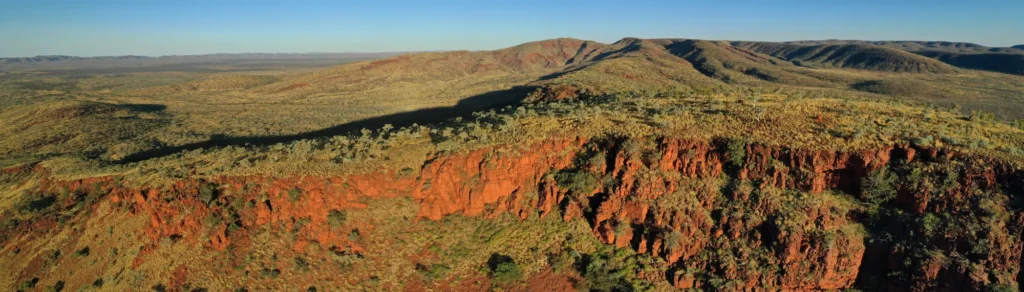
The Kiamal Solar Farm is located on more than 500 hectares of land acknowledged as the Country of the First Peoples of the Millewa-Mallee. It features more than 715,000 solar panels, delivering clean energy as part of Australia’s transition toward a sustainable future.
Australian Cultural Heritage Management (ACHM) completed the Cultural Heritage Management Plan (CHMP) for the project, providing the critical heritage assessments, fieldwork and Traditional Owner collaboration required for approval and construction. Our work ensured compliance with Victorian Aboriginal cultural heritage legislation and supported culturally informed decision making throughout development.
Through respectful engagement and thorough heritage assessment, ACHM helped enable one of Victoria’s most significant renewable energy initiatives to proceed responsibly and sustainably.
Client
TotalEnergies Renewables Australia
Location
Ouyen, Victoria
Sectors
Renewables
Services
Results Delivered
Protecting Cultural Heritage While Powering Australia's Clean Energy Transition
Through rigorous assessment, thorough fieldwork and genuine collaboration with Traditional Owners, Australian Cultural Heritage Management delivered a plan that supported approval and construction. TotalEnergies Renewables Australia gained a compliant, defensible pathway to build, with cultural heritage values properly accounted for.
Frequently Asked Questions
Do solar farms in Victoria need a Cultural Heritage Management Plan?
Land used to generate electricity is classed as a high impact activity under the Aboriginal Heritage Regulations. A mandatory CHMP is required where such an activity is proposed in an area of cultural heritage sensitivity. Where the site is not sensitive, a voluntary CHMP is often still recommended because an absence of registered places can reflect limited past survey rather than limited Aboriginal use of the land. Australian Cultural Heritage Management completed the CHMP for the Kiamal Solar Farm. Learn more about our cultural heritage management plan services.
What is an area of cultural heritage sensitivity?
Areas of cultural heritage sensitivity are landscapes identified in the Aboriginal Heritage Regulations as likely to contain Aboriginal cultural heritage, including land around registered Aboriginal places and certain landforms such as dunes. They determine when a high impact activity triggers a mandatory CHMP, so confirming whether a site falls within one is an early step for any solar project.
What does a CHMP for a solar farm involve?
A CHMP is prepared through staged assessment, starting with a desktop review, then standard field assessment and, where needed, complex assessment with subsurface testing. Traditional Owners take part throughout. For the Kiamal Solar Farm, Australian Cultural Heritage Management provided the heritage assessments, fieldwork and Traditional Owner collaboration required for approval and construction. Learn more about our archaeological assessment services.
Who must be consulted on a solar farm CHMP?
The sponsor must consult the Registered Aboriginal Party for the area. Where no party is registered, the plan is evaluated by the Secretary responsible for the Aboriginal Heritage Act 2006, through First Peoples State Relations. Early, respectful engagement with Traditional Owners helps the plan progress efficiently and ensures cultural values inform project design.
Why do large solar farms still need heritage assessment on farmed land?
Farming does not necessarily remove buried archaeological material, and cultural values attached to Country remain regardless of land use. A heritage assessment confirms what is present before construction begins, protecting both cultural heritage and the project programme.